

Human Systems Strategy: “The Full-Bodied Yes”
For over a decade, I was the high-achieving "Star Performer." I loved to go above and beyond, proving I could handle any complexity thrown my way. As a Workday expert and consultant, I was a master of technical systems. But internally, my life was a chaotic cycle of Success with Friction.
Don’t get me wrong, I had a lot of fun, but when life wasn’t "trigger-free," my stress response rotated between two default messages:When life wasn’t "trigger-free," my stress response rotated between two default messages:
“I’m fine, everything is fine”—until the inevitable meltdown and overwhelm.
“I’m not doing enough, because I’m not enough”—the engine of anxious-driven performance.
“True capacity isn't what you have when it's easy; it’s the capacity you maintain in the presence of adversity or when courage is needed.”
Despite the validation and promotions, I had a "hole in my bucket." No matter how much success I poured in, core stories of not being enough, not belonging, or being unsafe meant the bucket would never stay full. I was performing to buy safety—a state of conditional worth.
I worked 12-hour days not just to get the job done, but to prove I deserved to be there. I enjoyed the work, but the cost was building. It was work hard, play hard. And I “thrived” in it.
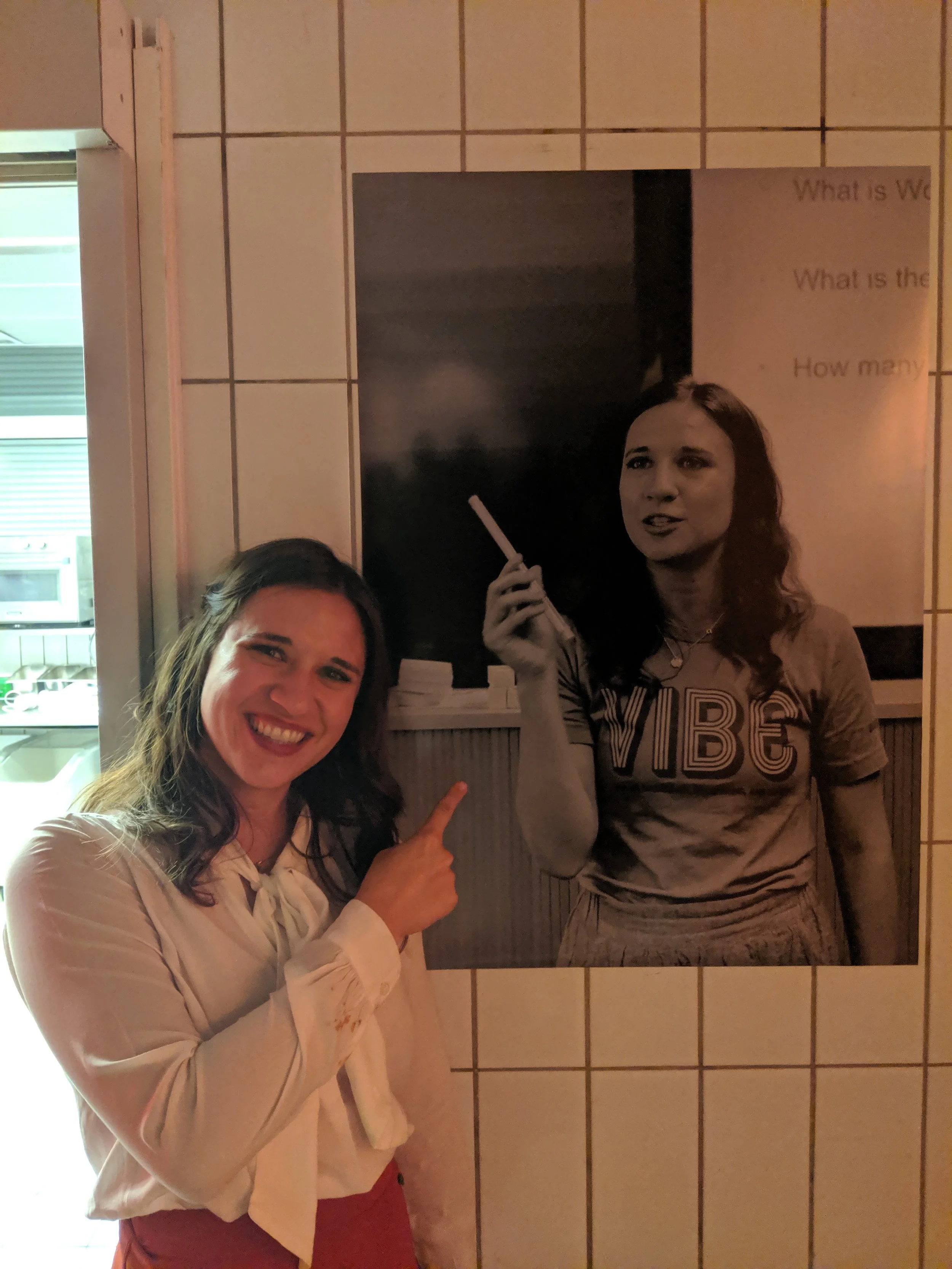
Working in Action
I worked 12-hour days not just to get the job done, but to prove I deserved to be there. I enjoyed the work, but the cost was building. It was work hard, play hard. And I “thrived” in it.
The High-Performer’s Blind Spot: Normalizing the "Swing"
In those early years, it wasn't all stress though. In fact, I had a ton of fun making friends with my workmates. My company valued us connecting together and Fun was one of our core values. I had a support system of incredible friends at work who eased the friction - some are still friends today. It made staying late together feel like a social hobby as opposed to what it was, work. But looking back, I was over-giving to the 'technical system' of my career while my 'personal system' at home was starving. I was ignoring my husband and personal responsibilities, because work was the place where I felt 'fine.' I felt supported, accepted, loved and valued. I didn't realize that my 'fun' was actually a high-functioning mask for a system that was slowly running out of fuel. Fun balanced out the dysregulating moments.
“Dysregulation is the hidden tax on every decision you make.
You cannot innovate from a system that is scanning for threats.”
We often ignore the toll our internal state takes because we’ve normalized the "running hot" lifestyle. I thought the cycle of overwhelm-to-shutdown—waiting for the valleys after the peaks—was just "the job." I didn't realize I was paying a Costly Tax™: the cumulative loss of innovation, motivation, and strategic vision that occurs when your nervous system is trapped in survival mode. Support does a lot to buffer our nervous system, but in 2018, I moved away from that support. I went straight to survival mode and I didn’t fully leave it for quite a long time.
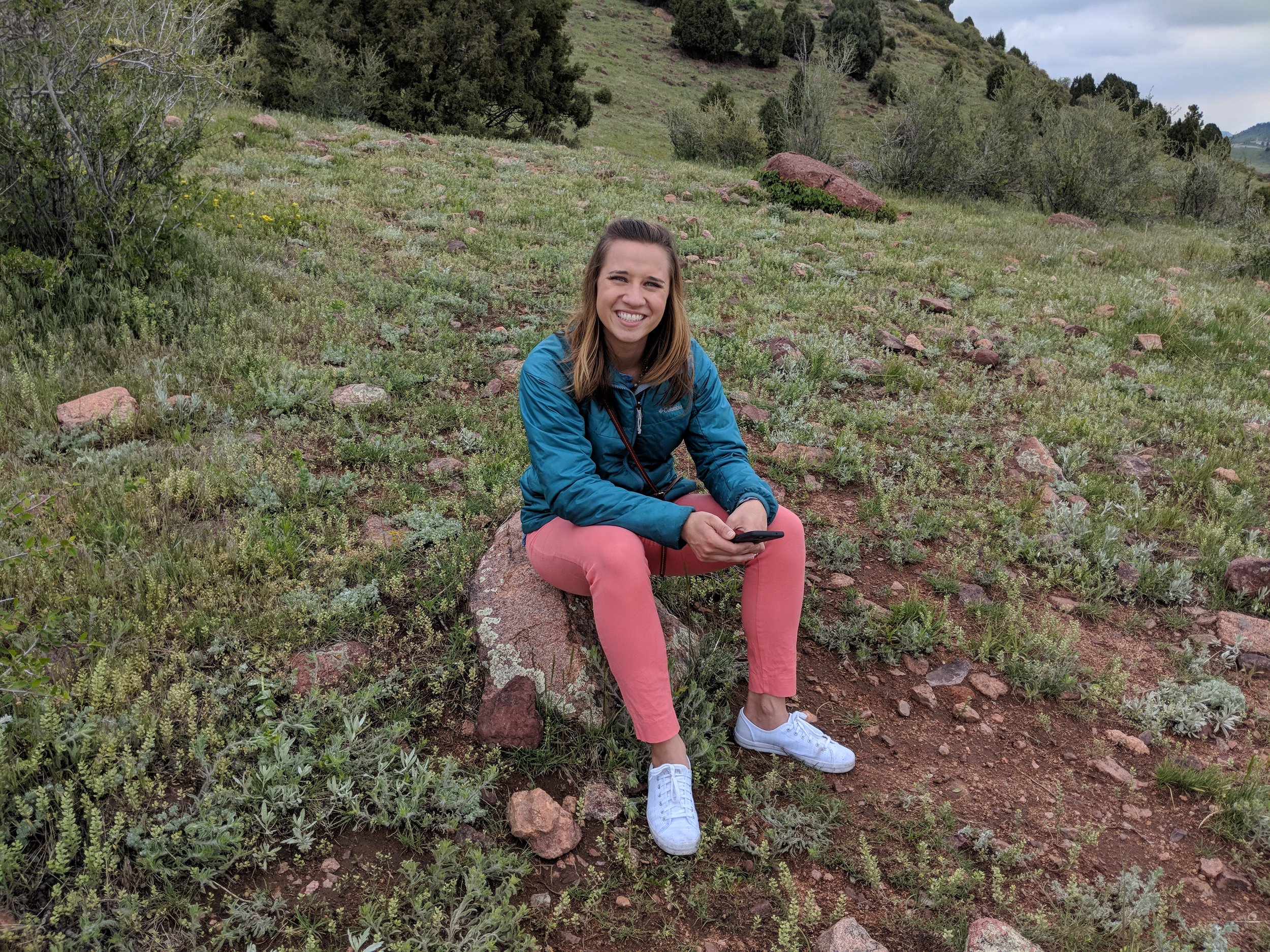
2017: Going on a work trip during my anniversary because I didn't feel I had the 'permission' to move the dates.
This is what it looks like to prioritize a technical system over a human one. I thought I could achieve success with both, but your human needs priority too.
The Catalyst: When Personal Pain Drives Strategic Research
My shift didn’t start at the office; it started in my living room. After a divorce in 2019 , Covid, and an anxiously driven relationship in 2023, my body was screaming for relief. I was determined to learn how to avoid the suffering. (Notice I said avoid and not heal—at least, not yet).
I still had success. I moved from Germany to the Netherlands, built a new support network, and a lot of good happened.
But, it all took a toll on my system.
2023 was the year of necessary struggle. Career wise, it’s the year I stepped into a manager role. When I learned my team consisted of very senior experts, my first thought wasn’t "I'm ready"—it was “I’m sorry.” What I didn’t know yet was that my insecurity as a manager—the Imposter Syndrome and the fear of "getting it wrong"—was simply my relational core wounds wearing a suit. My romantic relationship was a cycle of anxiously over-giving, and pretending things were fine. Between the intensity of my career and personal life, my system was crashing.
The relationship stressors and professional life fed off each other because it is all one system. When the suffering hit its peak end 2023, I said "enough." I couldn’t focus on controlling my external world anymore. I hit my rock bottom - again. This rock bottom led me down a research rabbit hole of personal accountability.
I immersed myself in systematically applying nervous system regulation, Thais Gibson’s Integrated Attachment Theory, and the connection between how stress and trauma are stored in the body on myself. I was determined to heal the beliefs causing my suffering so I would never have to feel that way again.
It worked.
“When we intentionally build safety in the body, the conditions are set for the mind to change.”
What is a Human Systems Strategist?
I call myself a Human Systems Strategist because I bridge the gap between two vital processes of the body-mind system:
Bottom-Up Processing (The Body): Using the "Language of the Body" (somatic regulation) to signal safety to the nervous system. If the body is in a threat response, the mind cannot think strategically or build the pathways for change.
Top-Down Processing (The Mind): Using "Blueprints" (Integrated Attachment Theory) to identify and rewire the subconscious beliefs, communication patterns, and relationship to boundaries that drive our behavior.
The Result: Targeted and efficient transformation in boundaries, communication patterns, and long term change.
The combination of the two was the sweet spot needed to bring about systematic and effective change. By using this one-system approach, I saw the body is triggered before the mind registers what has happened. Similarly, the mind changes it’s story in response to ‘the threat’ or safety present.
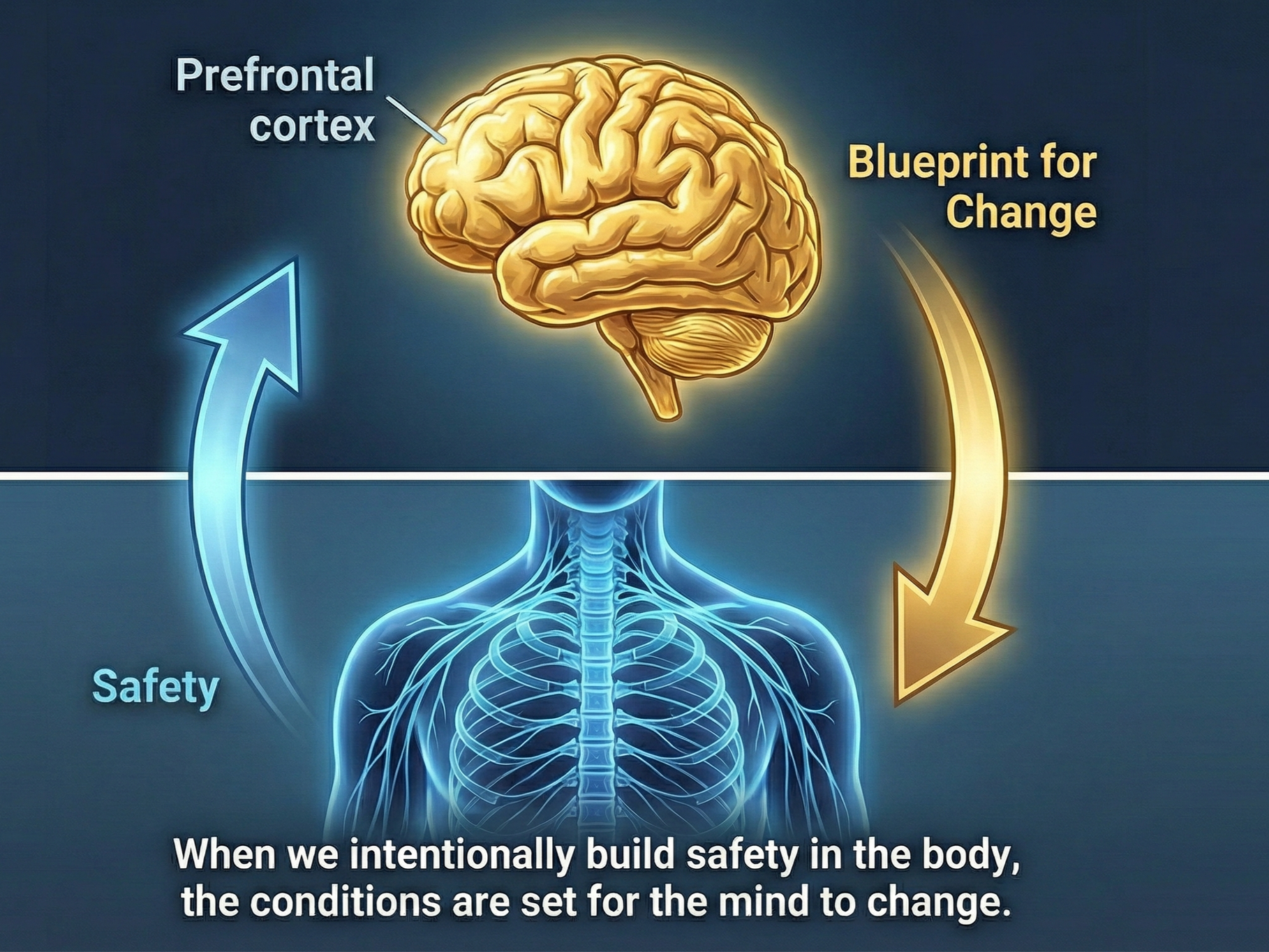
When awareness of the self and the information coming from the body and mind is established, we have the capacity to:
Catch the stories in action
Interrupt them with something new, and
Build a path forward for intentional resilience.
The Problem: The Costly Tax™ to Individuals and Organizations
When we work from a place of dysregulation, we aren't just tired; we are ineffective.
For the Individual: It’s the "Oh shit, that’s me" moment. It’s realizing your "missing motivation" isn't a lack of discipline—it’s a system in a Functional Freeze. Or, it’s the "tired but wired" state—pushing yourself to the point of collapse.
For the Organization: It’s a strategic loss. A dysregulated leader is a "cell" that creates a dysregulated team. Innovation stalls because the team is in a "freeze" response after a trauma like a layoff. They may have lost their strategic vision or the ability to implement it.
“Stress is experienced on a cellular level. Like many cells work together to run a human system, many people work together to make an organization.”
The Superpower in Action: 2024 and Beyond
By 2024, the "Human Systems" approach became my superpower. I learned to emotionally separate from old patterns without sacrificing my empathy. I learned to recognize where my team was at, and used it as levers to pull for their development and motivation.
The Personal: I held space to notice the sensations coming from my body that signaled overwhelm and could challenge the beliefs underneath. This is grounding into safety and new stories.
The Strategic: When a team member attempted to guilt-trip me, I could empathetically hold the boundary without the internal spiral that used to follow and introduce a different option.
The Organizational: When I was impacted by a layoff in 2025, I used my nervous system modulators to get my thinking brain back online before talking to HR. I acted out of Intentional Capacity, not fear. I left when a survival version of me would have stayed.
The Result: The C.O.R.E. Capacity Framework™

I provide the C.O.R.E. Capacity Framework™ to help you move from reactive management to intentional leadership.
Clarity: Defining your internal state and boundaries.
Observation: Noticing physiological states without judgment.
Regulation: Intentionally managing your energy to stay in your Window of Tolerance.
Empathy: Connecting with others while remaining anchored in your own resilient state.
“I am the human system. But, so are you. And your team. And the larger organization. We are not silos; we are an interconnected human system.”
I am here to help you stop "managing the suffering" and start redesigning your system architecture. Whether you are an individual looking for a "Full-Body Yes" or an organization looking to eliminate the Costly Tax™, the answer is the same: Optimize the Human System.
I am here - because this approach works. Come join me.
